 |
 |
|||||||||||||
|
||||||||||||||
|
|
|||||||||||||
|
 |
|
||||||||||||
|
||||||||||||||
|
||||||||||||||
| Recent Designation Research | ||||||||||||||
|
||||||||||||||
 |
||||||||||||||
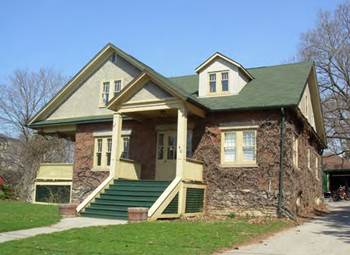
46 Dorset Street East The Thomas B. Spiers House has design value as an excellent example of Arts and Crafts inspired architecture popular in the early 20th century of which there are few examples in Port Hope. The bungalow exemplifies a particular period in the town’s development (1920-1935) and represents the local adoption of a widely popular form of house design. The dwelling exhibits quality detailing and workmanship and retains its integrity. Unique to the design is a cross gable, partial width inset side porch, prominent overhanging eaves, rich textural and colour contrast in the exterior finishes, prominent elevated front entrance with staircase and porch, and the form and pattern of original double hung wooden sash windows. 46 Dorset Street East has historical value having been completed in 1923 and is valued for its association with owner and builder, Thomas B. Spiers, a Port Hope engineer and owner of a local milling and lumber business. The Spiers House has contextual value due to its location on Dorset Street East across the street from the Bluestone. 46 Dorset Street East complements the neighbourhood and makes a noteworthy 20th century architectural contribution to neighbouring 19th century houses adding to the character of this important historical residential neighbourhood of Port Hope. |
||||||||||||||
 |
||||||||||||||
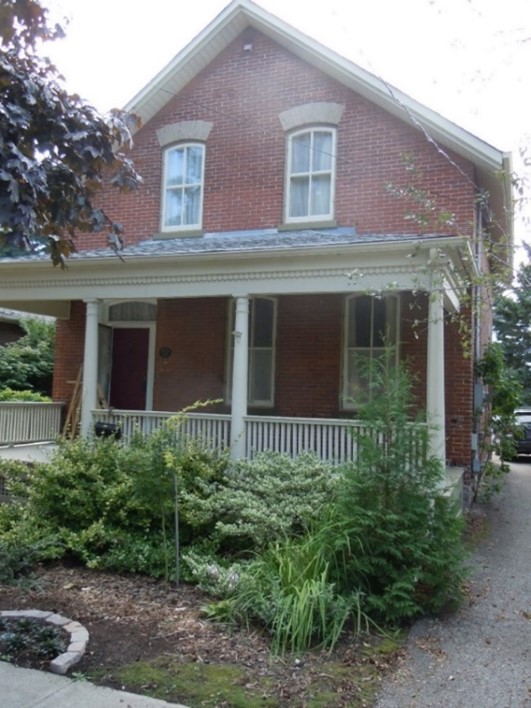
Mitchell House, 18 Princess Street, c. 1872-76 The Mitchell House has contextual value because it is notable as part of a pair of brick houses that were built in the early 1870s on a lot at the northern end of the intersection of Princess and Ward Street. The area was an important early residential neighbourhood known as Protestant Town located near St. Mark’s Church which was constructed in 1822 on King Street and one of the most prominent buildings in Port Hope’s early years. Noteworthy residences constructed in the area in 1834 included the Bluestone (21 Dorset Street East), the Little Bluestone (117 King Street), 15 King Street, and 18 King Street, which was the residence of the local builder, William Mitchell Sr. 18 Princess Street has historical value and associative value with the Mitchell family who were important early builders in the town of Port Hope. The house was built by the children of William Mitchell who along with his brother Robert was responsible for the construction of many early buildings. The Mitchell House has design value as it displays a well-preserved residential house form that is an historically authentic example of a late nineteenth century Ontario vernacular front gable house design that displays artistic merit and craftsmanship and incorporates Classical Revival design elements. | ||||||||||||||
 |
||||||||||||||
|
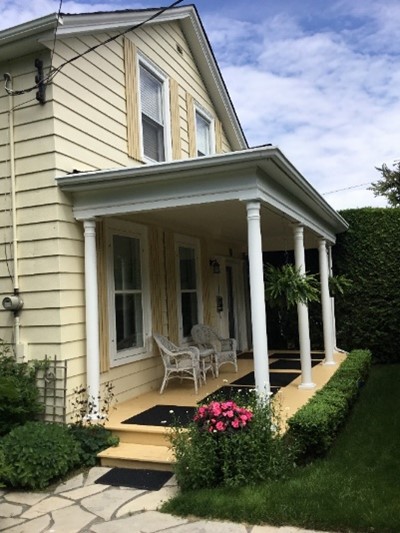
The Harvey Milton Rose House, 10 Armour Street, 1868-1870 The house is a well-preserved residential house form and historically authentic example of a vernacular gable front house design constructed in the mid to later 19th century in Port Hope and throughout Ontario. Typical of this type, the well-proportioned building form along with its setback and positioning on the street are all essential to its character. The house has design value because it is a representative example of the front facing gable house type incorporating Classical Revival elements, one of the most pervasive Ontario residential styles and extremely popular in urban architecture positioned on narrow lots.
|
||||||||||||||
 |
||||||||||||||













